Complete Guide to Finishing Reclaimed Wood
Everything you need to know about preparing, finishing, and protecting reclaimed lumber. From surface prep through final coat, this guide covers every finish type, application technique, and common mistake to avoid.
Request a Free Quote
Fill out the form below and our team will get back to you within one business day.
Why Finishing Reclaimed Wood Is Different
Finishing reclaimed wood is not the same as finishing fresh lumber from the mill. Reclaimed boards carry decades or centuries of history in their fibers -- old-growth grain density, prior finishes, nail holes, oxidation, and patina that give them their unique character. The wrong finish can obliterate that character, while the right finish enhances it and protects it for another lifetime of service.
This guide is written specifically for reclaimed lumber, with attention to the unique challenges it presents: uneven absorption from varying density, residual contaminants from previous uses, tannin bleed from old-growth heartwood, and the need to preserve aged patina rather than cover it with a thick film. Whether you are a professional woodworker or a homeowner tackling your first project, this guide will help you achieve professional results.
The finishing process has three phases: surface preparation, finish application, and curing and maintenance. Cutting corners on any phase compromises the final result. The most common cause of finish failure is inadequate preparation, not a poor-quality finish product.
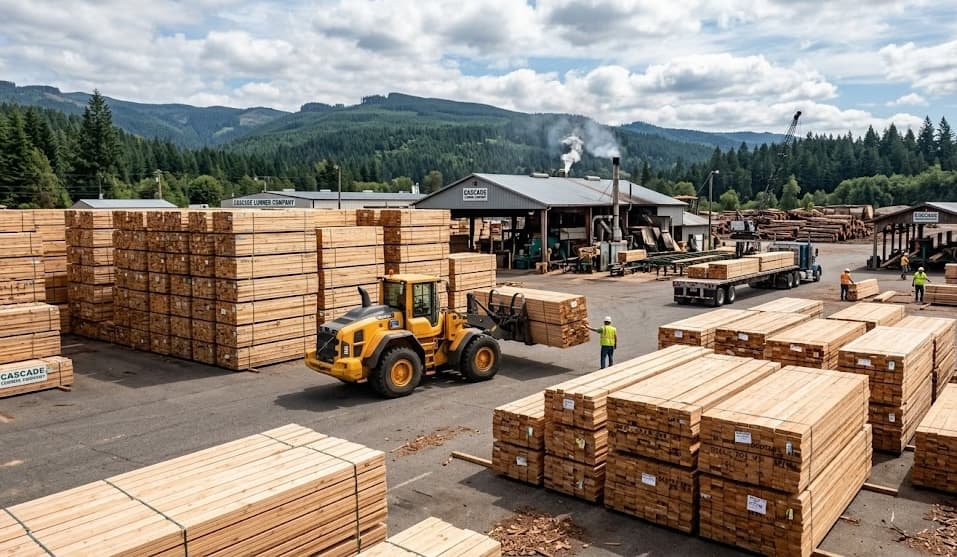
The natural patina of reclaimed wood tells a story. The right finish preserves that story while protecting the surface for decades to come.
Surface Preparation
Preparation is the foundation of a great finish. Spend 60% of your total project time on preparation and the remaining 40% on finishing.
Step 1: Inspection, De-Nailing & Cleaning
Before any sanding or finishing, reclaimed wood must be thoroughly inspected and cleaned. Start by checking every board for hidden nails, screws, staples, and metal fragments. Use a strong magnet or a handheld metal detector designed for woodworking to find fasteners buried beneath the surface. Missing even a single nail can destroy a sanding belt, damage a planer blade, or cause a dangerous kickback on a power tool.
Remove all fasteners with a cat's paw nail puller, end nippers, or a nail punch driven through the board from the back side. Fill nail holes with color-matched wood filler or leave them open as character marks depending on the desired aesthetic. For structural applications, nail holes should always be filled with epoxy filler to restore integrity.
Clean the surface to remove dirt, grime, old paint, and contaminants. A stiff bristle brush removes loose debris. For heavier contamination, a solution of TSP (trisodium phosphate) mixed according to label directions and applied with a scrub brush effectively cuts through decades of grime. Rinse with clean water and allow the wood to dry completely -- at least 48 hours in the Gulf South climate -- before proceeding to sanding.
Step 2: Sanding Progression
Sanding is a sequential process. Each grit removes the scratch pattern left by the previous grit. Skipping grits leaves visible scratches under the finish that cannot be fixed without stripping and starting over.
60-80 Grit -- Initial rough sanding
Use only for removing old finish, deep scratches, or heavy surface damage on reclaimed wood. This is aggressive and will remove material quickly. Skip this step if the surface is already reasonably smooth.
100-120 Grit -- Shaping and leveling
Removes the scratch pattern from coarse sanding and levels uneven surfaces. This is typically the starting grit for reclaimed wood that has been cleaned but not yet surfaced. Work with the grain to minimize cross-grain scratches.
150 Grit -- Smoothing
Refines the surface and removes the scratch pattern from 100-120 grit. This is where most of the time should be spent -- a thorough sanding at this stage makes all subsequent grits go faster and produces a better final result.
180-220 Grit -- Final sanding before finish
Produces the smooth surface that most finishes require. For oil finishes, 180 grit is often sufficient and allows better oil penetration. For film finishes like polyurethane and lacquer, sand to 220 grit for optimal adhesion. Do not skip to this grit from a coarser one -- the intermediate steps matter.
220-320 Grit -- Between-coat sanding
Used between coats of finish to scuff the surface for adhesion and remove dust nibs and brush marks. Light pressure only -- the goal is to degloss the surface, not sand through the previous coat. Always use a tack cloth after sanding to remove every particle of dust.
400+ Grit -- Final smoothing and rubbing out
Used for wet-sanding the final coat of finish or for rubbing out lacquer to a desired sheen. Finer grits (up to 2000) are used with rubbing compound to achieve a mirror-like polish on lacquer or epoxy finishes.
Step 3: Pre-Finish Conditioning
Some reclaimed species -- particularly pine, cherry, maple, and poplar -- absorb stain and finish unevenly, causing a blotchy appearance. A pre-stain wood conditioner partially seals the wood to equalize absorption. Apply the conditioner according to label directions and apply your stain or finish within the manufacturer's recommended window, typically two hours.
For reclaimed wood that will receive a penetrating oil finish, raise the grain first by wiping the sanded surface with a damp cloth and letting it dry. The moisture causes wood fibers to swell and stand up. Sand these raised fibers flat with the final grit, and the finished surface will be much smoother than if you had skipped this step. This grain-raising technique is especially important when using water-based finishes, which will raise the grain themselves if you do not pre-raise it.
Types of Finishes
Each finish type has distinct characteristics that make it ideal for certain applications. Choose based on your durability needs, desired appearance, and the intended use of the wood.
Oil-Based Polyurethane
Best for: High-traffic flooring, stair treads, tabletops, and surfaces that need maximum durability. Ideal when you want a traditional warm amber tone.
Advantages
- ✓Extremely durable and scratch-resistant
- ✓Rich amber warmth that enhances wood grain
- ✓Excellent moisture barrier when fully cured
- ✓Long-lasting protection on high-traffic surfaces
- ✓Widely available and affordable
Drawbacks
- ×Yellows and ambers significantly over time
- ×Strong odor during application and curing
- ×Difficult to touch up without sanding entire surface
- ×Can obscure the aged patina of reclaimed wood
- ×Requires good ventilation and longer project timeline
Application Technique
Apply thin, even coats with a high-quality natural bristle brush or lambswool applicator. Work with the grain in long, smooth strokes. Sand lightly with 220-grit between coats after each coat is fully dry. Remove all sanding dust with a tack cloth before applying the next coat. Maintain a wet edge to avoid lap marks.
Water-Based Polyurethane
Best for: Light-colored woods where you want to maintain the natural hue, modern interiors, reclaimed white oak or poplar where yellowing would be undesirable.
Advantages
- ✓Crystal clear finish that does not yellow
- ✓Low odor and low VOC formulations available
- ✓Fast drying allows multiple coats per day
- ✓Preserves the natural color of the wood
- ✓Easy soap-and-water cleanup
Drawbacks
- ×Slightly less scratch-resistant than oil-based
- ×Can raise the grain on first coat, requiring extra sanding
- ×Does not add warmth or amber tone
- ×Higher cost per gallon than oil-based
- ×More sensitive to application conditions (temperature, humidity)
Application Technique
Apply with a synthetic bristle brush or foam applicator pad. Water-based finishes dry quickly, so work in manageable sections and maintain a wet edge. The first coat will raise the grain -- sand with 220-grit and remove dust before applying the second coat. Subsequent coats require only light scuffing with 320-grit.
Tung Oil (Pure)
Best for: Countertops, cutting boards, butcher block, food preparation surfaces, furniture, and applications where a natural, tactile finish is desired. Excellent for reclaimed wood where you want to feel the grain texture.
Advantages
- ✓Penetrates deep into wood fibers for protection from within
- ✓Food-safe once fully cured (pure tung oil only)
- ✓Enhances grain without creating a plastic-looking film
- ✓Easy to repair and re-apply without stripping
- ✓Suitable for both interior and exterior applications
Drawbacks
- ×Very slow drying and curing time
- ×Requires many coats for adequate protection
- ×Less water-resistant than film finishes
- ×Can darken some species significantly
- ×Raw tung oil is thick and difficult to apply evenly
Application Technique
Thin pure tung oil 50/50 with citrus solvent for the first coat to improve penetration. Apply liberally with a lint-free cloth, let soak for 15-20 minutes, then wipe off all excess. Excess oil left on the surface will become sticky and never cure properly. Subsequent coats can be applied at full strength. Sand lightly with 400-grit between coats.
Danish Oil
Best for: Furniture, decorative panels, accent walls, shelving, picture frames, and any application where ease of use and natural appearance are priorities over maximum durability.
Advantages
- ✓Very easy to apply -- virtually foolproof
- ✓Blends oil and varnish for better protection than pure oil
- ✓Beautiful natural look that enhances aged character
- ✓Forgiving application -- hard to get wrong
- ✓Easy to maintain with periodic re-oiling
Drawbacks
- ×Less durable than polyurethane or lacquer
- ×Not food-safe (contains metallic driers)
- ×Needs periodic maintenance re-coating
- ×Not suitable for exterior use
- ×Limited moisture protection compared to film finishes
Application Technique
Flood the surface with danish oil and spread evenly with a lint-free cloth or foam brush. Let soak for 15 minutes, then apply more oil to any dry spots where the wood has absorbed the first application. After 30 minutes total, wipe off all excess with clean rags. The surface should look evenly wet but not pooled. Allow to dry completely before applying subsequent coats.
Lacquer
Best for: Fine furniture, cabinetry, musical instruments, and projects where a perfectly smooth, glass-like finish is desired. Best applied in a controlled shop environment.
Advantages
- ✓Extremely fast drying -- entire project can be finished in a day
- ✓Each coat chemically bonds to the previous coat
- ✓Crystal clear finish with excellent clarity
- ✓Easy to rub out to any desired sheen
- ✓Professional-quality results with spray application
Drawbacks
- ×Requires spray equipment for best results
- ×Extremely high VOC -- excellent ventilation mandatory
- ×Not as durable against water as polyurethane
- ×Can crack or craze over time on wood that moves seasonally
- ×Flammable during application and drying
Application Technique
Spray application with HVLP equipment produces the best results. Apply thin, even coats in a well-ventilated space away from ignition sources. Each coat dissolves into the previous coat, creating a single unified film. Build coats gradually rather than applying heavy coats, which will sag and run. Sand with 320-grit between every third coat and final-sand with 400-grit before the last coat.
Shellac
Best for: Antique furniture restoration, seal coats under other finishes, trim work, decorative pieces, and as a barrier coat on knotty or resinous reclaimed wood to prevent bleed-through.
Advantages
- ✓All-natural finish (made from lac bug secretion)
- ✓FDA-approved food-safe finish
- ✓Excellent sealer -- blocks odors, tannin bleed, and stains
- ✓Fast drying with easy application
- ✓Beautiful warm tone that enhances old-growth grain patterns
Drawbacks
- ×Dissolves in alcohol -- not suitable for bar tops
- ×Poor water resistance -- white rings from wet glasses
- ×Limited heat resistance
- ×Shelf life is limited (6-12 months once mixed)
- ×Not durable enough for high-traffic floors
Application Technique
Use dewaxed shellac (such as Zinsser SealCoat) for most applications. Apply in thin coats with a natural bristle brush or pad, working quickly in one direction. Do not go back over areas that have started to set. Each coat dries in about 30 minutes. Sand lightly with 320-grit between coats. For a French polish finish, apply with a pad in circular motions, building up many very thin layers.
Paste Wax
Best for: Decorative pieces, antique furniture where a traditional look is desired, over-coat on top of shellac or lacquer, display shelving, and wood art installations where the tactile quality matters.
Advantages
- ✓Produces a beautiful, hand-rubbed appearance
- ✓Very easy to apply and buff
- ✓Enhances the tactile quality of wood grain
- ✓Food-safe varieties available (beeswax-based)
- ✓Can be applied over other finishes for added protection
Drawbacks
- ×Minimal protection against moisture and staining
- ×Requires frequent re-application (every few months)
- ×Not suitable as a standalone finish on high-use surfaces
- ×Shows fingerprints and water spots easily
- ×Must be completely removed before applying any other finish
Application Technique
Apply a thin layer of wax with a lint-free cloth or cheesecloth, working in small circular motions. Allow the wax to haze over (15-20 minutes), then buff vigorously with a clean soft cloth until a smooth, warm luster appears. Apply a second coat after 24 hours for increased depth and protection. For large surfaces, work in sections to prevent the wax from drying too hard to buff.
Epoxy Resin
Best for: River tables, bar tops, countertops with live edges, filling large voids and nail holes in reclaimed beams, creating smooth surfaces from rough character wood, and artistic installations.
Advantages
- ✓Creates an absolutely waterproof, glass-like surface
- ✓Can fill voids, cracks, and checks in reclaimed wood
- ✓Extremely durable against scratches and impacts
- ✓FDA-compliant formulations available for food surfaces
- ✓Transforms rough character wood into smooth, usable surfaces
Drawbacks
- ×Expensive -- significantly more costly than other finishes
- ×Complex mixing and application process with no room for error
- ×Yellows with UV exposure unless UV-stabilized formula is used
- ×Cannot be easily repaired if damaged
- ×Requires precise temperature and humidity control during cure
Application Technique
Seal the wood first with a thin seal coat of epoxy to prevent air bubbles from rising through the flood coat. Mix resin and hardener at the exact ratio specified by the manufacturer -- even small deviations cause curing failures. Pour in layers no thicker than the manufacturer specifies (typically 1/4 to 1/2 inch per pour for standard epoxy, or up to 2 inches for deep-pour formulas). Use a heat gun or torch briefly to pop surface bubbles. Allow each pour to gel before adding the next layer.
Interior vs. Exterior Finishes
Interior Finishes
Interior finishes prioritize appearance, tactile quality, and protection against daily wear. The main enemies indoors are scratches from foot traffic and furniture, water damage from spills, and UV fading from window light. Film finishes (polyurethane, lacquer) provide the most durable barrier, while penetrating finishes (oils, wax) offer a more natural look and feel at the cost of requiring more frequent maintenance.
For reclaimed wood interiors in the New Orleans area, indoor humidity management is as important as the finish itself. Even the best finish cannot prevent wood movement caused by humidity swings. Maintain indoor relative humidity between 35 and 55 percent year-round to minimize seasonal expansion and contraction.
Low-VOC and zero-VOC finishes are increasingly popular for interior use, especially in bedrooms, nurseries, and living spaces. Water-based polyurethanes, natural oils, and wax finishes all offer low-VOC options without significant performance compromises.
Exterior Finishes
Exterior finishes must withstand UV radiation, rain, humidity cycling, temperature extremes, mold, mildew, and insect exposure. In the Gulf South climate, these stresses are particularly intense. Film-forming exterior finishes (varnish, paint) provide strong initial protection but eventually fail by peeling and cracking, requiring complete removal before re-coating.
Penetrating exterior stains and oils soak into the wood rather than forming a film on top. They wear away gradually rather than peeling, making maintenance as simple as cleaning the surface and re-applying the stain. Semi-transparent stains allow the grain of reclaimed wood to show through while providing UV protection through pigment particles that physically block light.
For reclaimed wood used in exterior applications such as decking, siding, and pergolas, we recommend penetrating oil stains with UV inhibitors and mildewcide. Plan to re-coat horizontal surfaces annually and vertical surfaces every two to three years. Always clean and lightly sand before re-coating to ensure adhesion.
Food-Safe Finishes
Reclaimed wood countertops, butcher blocks, and cutting boards require finishes that are safe for contact with food. The FDA regulates which substances are approved for food-contact surfaces, and several wood finishes meet these requirements once fully cured.
Pure tung oil (not tung oil finish, which contains additives) is the gold standard for food-safe wood finishing. It penetrates deeply, cures to a hard, water-resistant film within the wood fibers, and is completely food-safe once cured. Apply four to six thin coats, allowing 24 to 48 hours between coats, and allow a full 30 days for complete curing before food contact.
Mineral oil is the simplest food-safe option and is used extensively on commercial cutting boards. It never fully cures (remains a liquid oil within the wood), which means it needs frequent re-application but also means it is easy to maintain. Apply a generous coat, let it soak in for several hours or overnight, then wipe off the excess. Re-apply monthly for cutting boards and quarterly for countertops.
Beeswax combined with mineral oil creates a slightly more durable food-safe finish. Melt beeswax into warm mineral oil at a ratio of one part wax to four parts oil, let the mixture cool to a paste, and apply with a cloth. This combination provides better water resistance than mineral oil alone while remaining completely food-safe. Commercial products like Howard's Butcher Block Conditioner use this formula.
Pure Tung Oil
Maintenance: Re-apply annually
Protection: Good water resistance once cured
Best overall food-safe finish. Takes patience due to long cure time but provides lasting protection.
Mineral Oil
Maintenance: Re-apply monthly
Protection: Moderate -- never fully cures
Easiest to apply and maintain. Inexpensive and available at any pharmacy. Use food-grade mineral oil only.
Beeswax + Mineral Oil
Maintenance: Re-apply every 2-3 months
Protection: Good -- better than mineral oil alone
Creates a soft, tactile surface with improved water beading. Safe for all food contact.
UV Protection for Reclaimed Wood
Ultraviolet radiation is the primary cause of color change in wood. Most species darken with UV exposure -- heart pine deepens to a rich amber, cherry darkens dramatically, and white oak develops a golden tone. Some species, like walnut, actually lighten with UV exposure. These color changes are a natural response and are considered desirable by many, but if you want to preserve the color of your reclaimed wood as installed, UV protection is essential.
UV-protective finishes contain either zinc oxide or titanium dioxide particles that absorb and scatter UV radiation before it reaches the wood. These additives are available as standalone products that can be mixed into your chosen finish, or they are pre-mixed into marine-grade varnishes and exterior stains. For interior applications, UV-filtering window films block up to 99 percent of harmful UV and are nearly invisible.
For exterior reclaimed wood, pigmented stains provide the best UV protection because the pigment particles physically block light. Clear exterior finishes offer minimal UV protection and degrade rapidly in direct sunlight. A semi-transparent stain strikes the best balance between showing the character of reclaimed wood and protecting it from UV damage.
Common Finishing Mistakes to Avoid
We see these mistakes regularly on projects that come through our shop for repair. Avoid them and your finish will look better and last longer.
Skipping sanding grits
Always progress through grits sequentially. Jumping from 80 to 220 grit leaves deep scratch marks that show through the finish. Each grit removes the scratch pattern of the previous one.
Not removing all dust before finishing
Vacuum the surface, then wipe with a tack cloth immediately before applying finish. Even tiny dust particles create visible bumps under a clear finish. Close windows and turn off fans while the finish dries.
Applying finish too thick
Multiple thin coats always outperform a single thick coat. Thick coats take longer to dry, are prone to runs and sags, trap solvents that cause bubbling, and cure unevenly. If you can see the finish pooling, you have applied too much.
Not stirring the finish properly
Stir polyurethane and varnish gently but thoroughly before each use. Never shake the can -- shaking introduces air bubbles that transfer to the surface. Flatting agents in satin and matte finishes settle to the bottom and must be redistributed.
Finishing in poor conditions
Temperature between 60-80 degrees Fahrenheit and humidity below 70 percent is ideal for most finishes. Cold temperatures slow curing and cause finishes to flow poorly. High humidity causes blushing in lacquer and slow curing in polyurethane. Avoid applying finish in direct sunlight.
Not testing the finish first
Always test your finish on a scrap piece of the same wood or an inconspicuous area. Reclaimed wood absorbs finish differently than new lumber due to its age, density, and prior exposure. Testing reveals how many coats you need and how the color will change.
Ignoring the end grain
End grain absorbs finish much faster than face grain, leading to blotchy, dark spots. Seal end grain first with a diluted wash coat of the finish or with shellac. This evens out absorption and produces a consistent appearance across the entire piece.
Re-coating too soon
Follow the manufacturer's recommended recoat window. Applying a new coat before the previous one has dried sufficiently traps solvents, causing peeling, wrinkling, and cloudy patches. In the humid Gulf South climate, add extra drying time beyond the label recommendation.
Drying vs. Curing: Understanding the Difference
Drying and curing are two different processes, and confusing them is a common source of finish problems. Drying is the evaporation of solvents from the finish, which makes the surface feel dry to the touch. Curing is the chemical cross-linking of the finish molecules, which gives the finish its final hardness, durability, and chemical resistance. A finish can feel dry in hours but take weeks to fully cure.
During the curing period, the finish is vulnerable to damage. Placing objects on a polyurethane surface before it has fully cured can leave permanent impressions. Walking on a newly finished floor before the cure is complete can cause scuffing that would not occur on a fully cured surface. Plan your project timeline to account for full cure times, not just dry-to-touch times.
In the Gulf South climate, high humidity slows both drying and curing. Add 25 to 50 percent extra time beyond the manufacturer's recommendations during humid months (May through October). Using a dehumidifier in the space during finishing and curing significantly improves results.
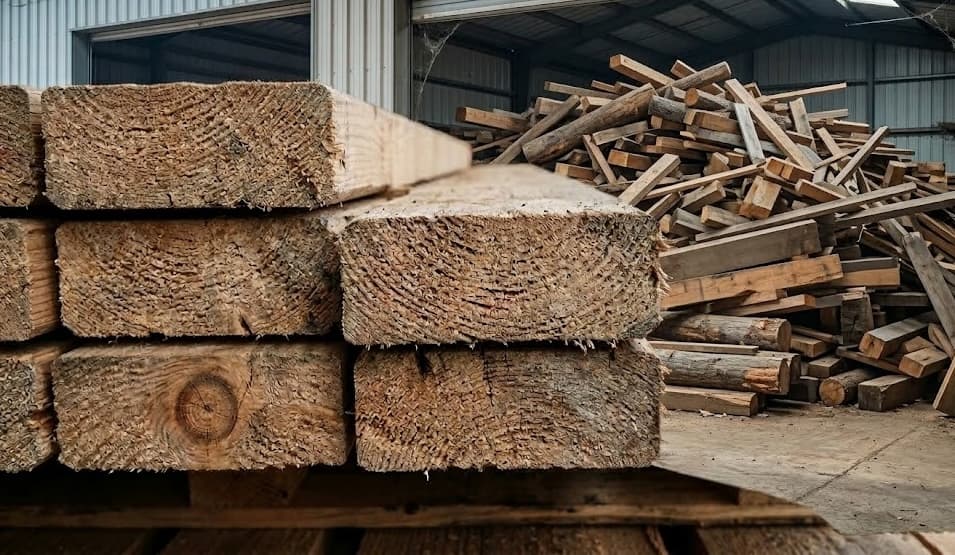
Need Help Choosing the Right Finish?
Our team has finished thousands of board feet of reclaimed lumber across every application imaginable. We can recommend the perfect finish for your species, application, and aesthetic goals.