Professional Lumber Grading Services
We visually grade reclaimed lumber for third-party clients — providing the documentation that engineers, building officials, and insurance companies require for structural and finish applications.
Request a Free Quote
Fill out the form below and our team will get back to you within one business day.
Reclaimed Lumber Deserves Professional Grading
Reclaimed lumber is not graded at the mill like new lumber. When a board is salvaged from a demolished building, its original grade stamp — if it ever had one — is long gone. Yet building codes, structural engineers, and insurance companies all require documentation of lumber quality before reclaimed material can be used in structural applications.
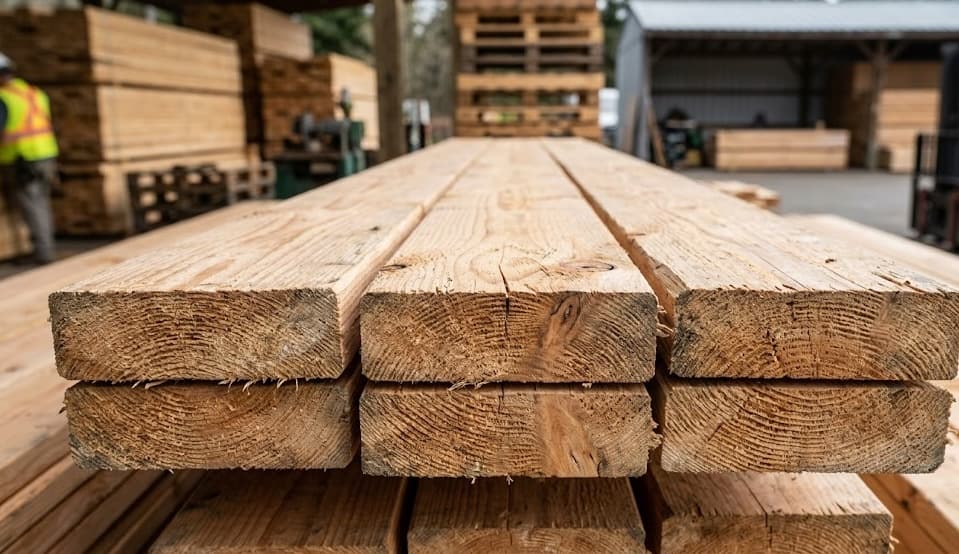
That is where professional grading comes in. We visually inspect every board, beam, or timber against established grading standards — evaluating species, grain direction, knot size, splits, checks, wane, decay, insect damage, and moisture content. The result is a grading report that documents the species, grade, dimensions, and condition of each piece, giving engineers and code officials the information they need to approve the material for its intended use.
We grade reclaimed lumber not only from our own inventory but also for third-party clients — salvage dealers, contractors, woodworkers, and homeowners who have acquired reclaimed material and need it professionally evaluated before use. Whether you have a single beam for a mantel or a truckload of flooring for a restoration project, we can grade it accurately and provide the documentation you need.
Service Overview
- StandardsASTM, NHLA, SPIB
- Turnaround3-5 business days
- Report IncludedYes, detailed PDF
- On-Site AvailableYes (NOLA metro)
- Minimum OrderNo minimum
Grading Standards We Apply
We grade to nationally recognized standards appropriate to the species, intended use, and regulatory requirements of each project.
Standard Practice for Establishing Structural Grades
The primary standard for establishing structural grades and related allowable properties for visually graded lumber. ASTM D245 provides the methodology for evaluating the strength-reducing characteristics of wood — knots, slope of grain, shakes, splits, checks, wane, and density — and translating those observations into design values. This is the standard most referenced by engineers evaluating reclaimed timber for structural reuse.
National Hardwood Lumber Association Standards
The NHLA grading system — FAS, FAS One Face, Select, No. 1 Common, No. 2A Common, No. 2B Common, and No. 3 Common — is the industry standard for grading hardwood lumber based on the percentage of clear (defect-free) wood in each board. While originally developed for new lumber, these grades are applicable to reclaimed hardwoods (oak, walnut, cherry, maple) destined for furniture, cabinetry, and millwork applications.
Southern Pine Inspection Bureau Standards
SPIB rules are the definitive grading standard for Southern yellow pine, which includes longleaf heart pine — the most commonly salvaged softwood species in the Gulf South. SPIB grades (Select Structural, No. 1, No. 2, No. 3, Stud, Construction, Standard, Utility) establish allowable design values for structural applications and appearance standards for finish applications.
West Coast Lumber Inspection Bureau / Western Wood Products Association
These rules cover Douglas fir, Western red cedar, and other Western species that occasionally appear in reclaimed lumber inventories — particularly in beams and timbers salvaged from industrial buildings that used West Coast timber. We grade to these standards when the species warrants it.
Grades We Assign
Each piece of reclaimed lumber receives a grade that reflects its suitability for structural, appearance, or character applications.
The highest structural grade. Tight knots, straight grain, minimal defects. Suitable for the most demanding load-bearing applications. Reclaimed lumber graded Select Structural commands premium pricing and is relatively rare — most salvaged material has enough character marks to disqualify it from this top grade.
High structural quality with moderate knots, slight slope of grain, and minor surface defects permitted. Well-suited for exposed beams, headers, joists, and rafters where both appearance and structural performance matter. This is the most common structural grade for high-quality reclaimed timber.
Sound structural lumber with larger knots, moderate slope of grain, and some wane permitted. Appropriate for framing, floor systems, and structural applications where the lumber will be concealed behind finishes. Allowable design values are lower than No. 1 but still adequate for most residential construction.
Lower structural grade with significant defects permitted — large knots, pronounced slope of grain, splits, and wane. Suitable for light-duty framing, blocking, temporary construction, and non-structural applications. Not recommended for primary structural members.
Graded for visual quality rather than structural performance. Clear or nearly clear faces with tight grain and minimal defects. Selected for flooring, paneling, millwork, furniture, and any application where the wood surface is visible and aesthetics are the primary concern.
A grade we assign to reclaimed lumber that has significant visual character — nail holes, weathering, saw marks, insect galleries, checking, and color variation — that makes it desirable for rustic, industrial, or feature applications. Not graded for structural use, but structurally sound for non-load-bearing installations.
How We Grade Your Lumber
Intake & Metal Detection
Every piece is scanned with an industrial metal detector to locate and remove embedded nails, screws, and bolts. Remaining metal is documented on the grading report. Metal detection protects our surfacing equipment and ensures safe handling.
Species Identification
We positively identify the wood species using visual characteristics (color, grain pattern, growth ring structure), hand lens examination of cellular structure, and chemical spot tests when necessary. Species ID determines which grading rules and design values apply.
Moisture Content Testing
Pin-type and pinless moisture meters are used to measure moisture content at multiple points along each piece. We record the average, minimum, and maximum readings. Moisture content directly affects dimensional stability, strength, and suitability for interior use.
Visual Inspection
Each piece is inspected on all four faces and both ends. We evaluate and measure every strength-reducing characteristic specified by the applicable grading rules: knots, slope of grain, shakes, splits, checks, wane, decay, insect damage, and any other defects.
Grade Assignment
Based on the visual inspection findings, each piece is assigned a grade according to the applicable standard. The grade is marked on the piece (if the client requests physical marking) and recorded in our grading database along with all supporting measurements.
Report Delivery
We produce a detailed grading report in PDF format that includes species identification, moisture content, dimensions, grade assignment, and a board-by-board defect inventory. For structural applications, the report includes the applicable allowable design values from the referenced standard.
Grading Tools & Equipment
Professional grading requires professional tools. Here is what we use to ensure accurate, consistent, and documented results.
Pin-Type Moisture Meter
Measures moisture content at specific points within the board by driving two pins into the wood and measuring electrical resistance. Essential for verifying that reclaimed lumber has been properly dried before grading. We take readings at multiple points along each board.
Pinless Moisture Meter
Uses electromagnetic waves to scan moisture content over a larger area without penetrating the wood surface. Useful for rapid screening of large batches and for checking moisture in finished or sensitive surfaces where pin holes are unacceptable.
Slope-of-Grain Indicator
A scribe tool that follows the grain direction on the wood surface, measuring the angle of grain deviation from the board axis. Slope of grain is one of the most critical strength-reducing characteristics — a 1-in-8 slope can reduce bending strength by 50 percent relative to straight-grained material.
Calipers & Tape Measures
Precision measurement of board dimensions — thickness, width, length — and defect sizes. Knot diameters, check depths, split lengths, and wane encroachment are all measured to the nearest 1/16 inch and recorded on the grading report.
Species Identification Tools
Hand lens (10x magnification), UV light, and chemical reagents for confirming wood species identification. Accurate species ID is essential because allowable design values vary dramatically between species — misidentifying cypress as pine (or vice versa) could result in an unsafe structural application.
Metal Detector
Industrial-grade handheld metal detector for locating hidden nails, screws, bolts, and other ferrous and non-ferrous metal embedded in reclaimed lumber. Metal detection is performed before grading to protect surfacing equipment and to document the presence of embedded hardware.
What It Costs and How Long It Takes
Grading fees are based on the volume and complexity of the material being evaluated. For standard dimensional lumber (boards and planks), we charge per board foot with a minimum engagement fee. For large timbers and beams, we charge per piece due to the additional time required for thorough inspection.
| Material Type | Pricing Basis | Turnaround | Report |
|---|---|---|---|
| Boards & Planks | Per board foot | 3-5 business days | PDF report |
| Beams & Timbers | Per piece | 3-5 business days | PDF report |
| Rush Service | 1.5x standard rate | 1-2 business days | PDF report |
| On-Site Grading | Per hour + travel | Same day (verbal) | PDF within 3 days |
The material can be delivered to our facility in New Orleans, or we can perform on-site grading at your location within the metro area. On-site grading is priced hourly plus travel time. For projects outside the New Orleans metro, we offer on-site grading by arrangement — contact us for a quote.
For detailed pricing, please contact us with the species, approximate volume, and intended use of your material. We will provide a firm quote within one business day.
Who Needs Lumber Grading — and Why
Structural Engineers
Engineers need documented species identification and grade assignments to calculate allowable design values for reclaimed beams, timbers, and framing members. Without a grading report, most engineers cannot approve reclaimed lumber for structural use.
Building Officials
Code officials in many jurisdictions require documentation that reclaimed lumber meets the structural grade specified on the plans. A professional grading report provides the evidence needed for permit approval and inspection sign-off.
Insurance Companies
Some insurance carriers require documentation of structural lumber quality as a condition of coverage — particularly for older homes where the original framing includes reclaimed or repurposed members. A grading report demonstrates that the structure meets current standards.
Salvage Dealers
Dealers who sell reclaimed lumber to builders and contractors benefit from professional grading because it adds credibility, justifies pricing, and reduces liability. Graded lumber is easier to sell and commands higher prices than ungraded material.
Contractors & Builders
Builders using reclaimed lumber on projects — particularly in historic districts where the use of salvaged materials is encouraged or required — need grading documentation to satisfy owners, architects, and inspectors.
Homeowners
Homeowners who have acquired reclaimed lumber (from a barn teardown, estate sale, or their own renovation) and want to use it structurally need professional grading to ensure the material is safe and code-compliant for its intended application.
Learn More About Lumber Grading
Lumber Grades Guide
Comprehensive guide to understanding lumber grades, defects, and quality classifications.
Building Codes Guide
How reclaimed lumber fits into IRC, IBC, and Louisiana building codes for structural applications.
Wood Species Guide
Detailed profiles of every species we carry — Janka hardness, grain, color, and best uses.
Frequently Asked Questions
Do you provide stamped grading certificates?+
Yes. For structural projects we can provide stamped visual grading reports from qualified inspectors to satisfy building department requirements.
Can you grade beams that are already installed?+
We prefer to grade materials in our yard, but we can perform on-site assessments and coordinate engineering review when removal is impractical.
What information do engineers need for reclaimed lumber?+
Species identification, dimensions, grade, moisture content, and notable defects. We supply this data with photos to streamline engineering review.
Can you re-saw and re-grade lumber?+
Yes. We can re-saw, surface, and then re-grade boards to meet your specified dimensions and appearance or structural requirements.
How long does grading take?+
Small batches are typically graded within 2–3 business days. Larger commercial lots may take up to a week depending on volume and documentation needs.
Need Your Reclaimed Lumber Graded?
Tell us the species, volume, and intended use of your material, and we will provide a grading quote within one business day. No minimum order.